How Cage Ladders Reduce Workplace Accidents?
How Cage Ladders Reduce Workplace Accidents?
Workplace safety is a critical priority across industrial, manufacturing, warehousing, and infrastructure environments. In facilities where employees regularly access elevated platforms, rooftops, tanks, or mezzanine floors, fall hazards pose a significant risk. Even a minor lapse at height can result in serious injuries, downtime, and legal liabilities. This is where Pinax Steel Cage Ladders play a vital role.
Designed to enhance vertical access safety, cage ladders provide a protective structure that significantly reduces the likelihood and severity of workplace accidents. For B2B clients focused on compliance, productivity, and employee well-being, cage ladders are a reliable and long-term safety solution.
Understanding the Risk of Vertical Access
Fixed vertical ladders are commonly used in industrial setups due to space constraints and structural requirements. However, without proper safety measures, climbing these ladders can expose workers to:
- Slips due to oil, dust, or moisture
- Loss of balance while ascending or descending
- Fatigue during extended climbs
- Falling from a height due to sudden missteps
Falls from height remain one of the leading causes of serious workplace injuries globally. The impact extends beyond physical harm — it disrupts operations, increases insurance costs, and can lead to regulatory penalties. Preventive infrastructure, therefore, becomes essential rather than optional.
What Is a Cage Ladder?
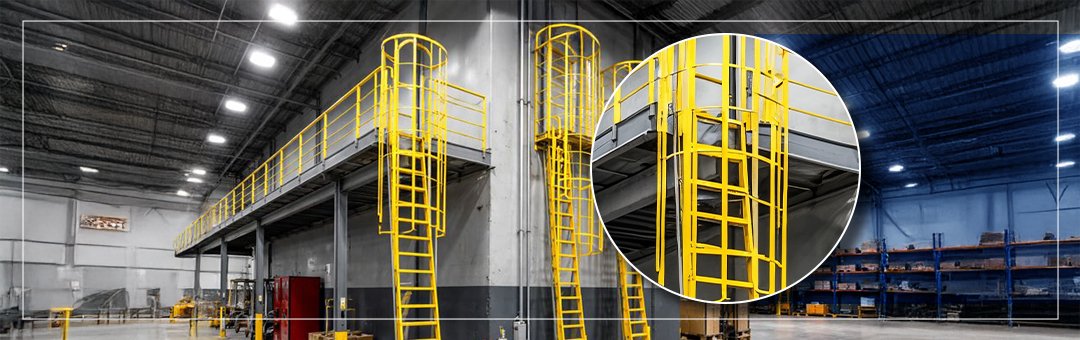
A cage ladder is a fixed vertical ladder enclosed within a protective circular or semi-circular cage. The cage surrounds the climbing space, creating a barrier that limits the distance a person can fall backward or sideways.
Pinax Steel manufactures cage ladders using high-quality steel, engineered for structural strength, durability, and long-term performance in demanding industrial environments. These ladders are commonly installed in factories, power plants, warehouses, water treatment facilities, telecom towers, and large commercial buildings.
How Cage Ladders Improve Safety
1. Fall Protection Through Enclosure
The most important function of a cage ladder is fall mitigation. The surrounding cage creates a protective envelope around the worker. If a climber loses balance, the cage restricts excessive backward movement, reducing the risk of a full fall.
While no ladder replaces proper training and safety protocols, the cage structure acts as an additional physical safeguard — a critical factor in high-risk industrial zones.
2. Improved Climber Confidence and Stability
Psychological safety plays a major role in reducing accidents. Workers climbing at height may experience anxiety or hesitation, especially during long vertical ascents. The enclosed design of a cage ladder provides a sense of security and stability, encouraging steady and controlled movement.
When employees feel secure, they are less likely to rush, panic, or make sudden movements that could lead to slips or missteps.
3. Controlled Climbing Path
Pinax Steel cage ladders are engineered with consistent rung spacing and sturdy side rails. The cage structure naturally guides the climber’s movement within a fixed vertical path, minimizing lateral deviation. This controlled alignment improves posture and balance during ascent and descent.
In high-traffic industrial settings where multiple workers access elevated platforms, structured climbing systems help maintain orderly and safe movement.
4. Durable Construction for Hazardous Environments
Industrial environments often expose access systems to moisture, chemicals, dust, and temperature variations. Weak or corroded ladders increase accident risk over time.
Pinax Steel cage ladders are manufactured using robust steel sections and can be finished with protective coatings such as galvanization for corrosion resistance. This ensures long-term structural integrity even in outdoor or high-humidity conditions.
A durable ladder system reduces structural failure risks — a critical component of accident prevention.
5. Compliance with Safety Standards
Many industrial safety regulations mandate protective measures for fixed ladders beyond certain heights. Installing cage ladders supports compliance with occupational safety norms and building codes.
For businesses, compliance is not just about avoiding penalties — it reflects a commitment to employee welfare and responsible operations. Pinax Steel designs cage ladders in alignment with industry standards, helping organizations strengthen their safety infrastructure.
Reduced Downtime and Operational Risk
Workplace accidents have operational consequences. Injuries can lead to halted operations, workforce shortages, investigations, and reputational damage. By proactively installing cage ladders, organizations reduce the probability of fall-related incidents.
Safer access systems mean fewer disruptions, smoother inspections, and more efficient maintenance routines. In facilities where regular monitoring of equipment at height is necessary, safe climbing solutions directly support operational continuity.
Customization for Diverse Industrial Needs
Not all industrial structures are identical. Tank heights, rooftop elevations, and access points vary across facilities. Pinax Steel offers customizable cage ladder solutions based on height requirements, mounting configurations, and site-specific structural conditions.
From straight vertical installations to platform-connected systems, the ladders can be engineered to integrate seamlessly with existing infrastructure. Proper design alignment ensures both safety and ease of use.
Supporting a Safety-First Culture
Infrastructure influences behavior. When organizations invest in secure access systems, it sends a clear message about prioritizing worker safety. Cage ladders are more than structural components — they are visible indicators of a safety-driven workplace culture.
Employees working in environments equipped with proper protective systems are more likely to follow safety protocols and perform tasks with confidence and care.
Conclusion
Preventing workplace accidents requires a combination of training, policy, and infrastructure. Among these, structural safety solutions play a foundational role.
Pinax Steel Cage Ladders offer enhanced fall protection, structural durability, regulatory compliance, and long-term reliability. By minimizing fall risks and improving climbing stability, they help organizations safeguard their workforce while maintaining operational efficiency.
For industries where vertical access is unavoidable, investing in high-quality cage ladders is not just a compliance requirement — it is a strategic decision toward safer and more sustainable industrial growth.