Solar Mounting Structure Maintenance: A Practical Guide for Long-Term Performance
Solar Mounting Structure Maintenance: A Practical Guide for Long-Term Performance
Solar energy systems are a long-term investment, and maintaining their structural integrity is essential for consistent performance. While solar panels receive regular attention, the supporting framework also requires proper inspection and maintenance. A well-maintained Solar Panel Mounting Structure helps ensure panel stability, withstands environmental conditions and supports the overall efficiency of a solar installation.
For industrial rooftops, commercial buildings and ground-mounted solar projects, regular maintenance can help prevent avoidable damage and extend the service life of the installation.
Why Solar Panel Mounting Structure Maintenance Matters?
A Solar Mounting Structure supports photovoltaic panels and transfers their loads safely to the building or foundation. Over time, exposure to sunlight, rain, wind, dust and temperature variations can affect structural components.
Neglecting maintenance may lead to corrosion, loose fasteners, damaged coatings or alignment issues. These problems can compromise structural stability and increase repair costs.
A planned maintenance schedule helps identify potential issues early, allowing project owners to address them before they become major concerns.
1. Inspect the Structure Regularly
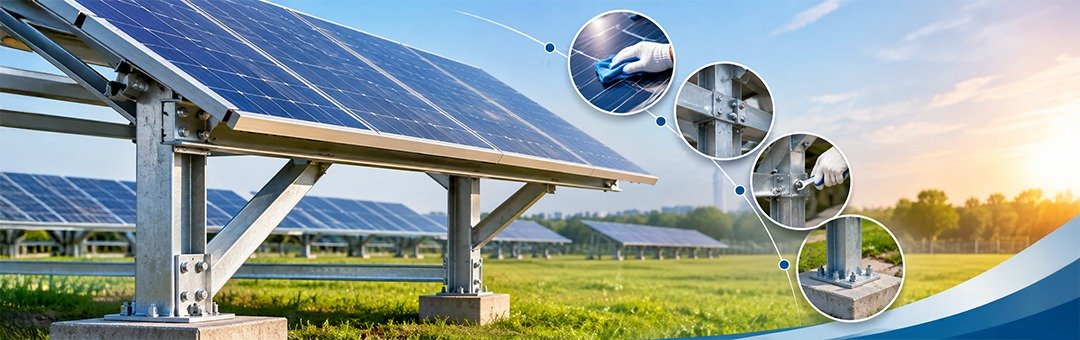
Routine visual inspections are the first step towards effective maintenance. Check steel members, support columns, beams, bracing and connection points for visible signs of damage.
Look for bent sections, cracks, deformation or unusual movement. Pay particular attention to areas exposed to heavy rainfall, strong winds or industrial pollution.
Inspections should be carried out by qualified personnel, especially for rooftop installations where access and working at height require appropriate safety precautions.
2. Prevent Corrosion and Surface Damage
Corrosion is one of the major concerns for metal structures exposed to outdoor conditions. Moisture, humidity and airborne pollutants can gradually affect protective coatings.
Inspect galvanised or coated steel components for scratches, peeling, rust spots and coating damage. Any damaged protective surface should be assessed and repaired using suitable methods recommended by the manufacturer.
A properly protected Solar Mounting Structure can better withstand environmental exposure and maintain its structural reliability over time.
3. Check Bolts, Fasteners and Connections
Bolted connections play an important role in maintaining the stability of solar mounting systems. Vibrations, thermal movement and environmental exposure may affect connections over time.
Check bolts, nuts, clamps and other fastening components for signs of loosening, corrosion or damage. Tightening should follow the specified torque requirements and approved maintenance procedures.
Avoid using excessive force or replacing fasteners with unsuitable alternatives. Correct connections help maintain the designed load-bearing capacity of the structure.
4. Keep Drainage and Roof Areas Clear
For rooftop solar installations, water accumulation can create additional stress on roof surfaces and mounting components. Blocked drainage channels may also increase the risk of moisture-related damage.
Keep roof drains, gutters and surrounding areas free from leaves, debris and other obstructions. Ensure that the mounting arrangement does not interfere with the building’s drainage system.
Proper water management helps protect both the Solar Mounting Structure and the rooftop beneath it.
5. Monitor Alignment and Structural Stability
Solar panels should remain properly aligned according to the original installation design. Changes in alignment may indicate movement, damaged supports or issues with the foundation.
Check for uneven panel rows, displaced supports and visible changes in the structure’s geometry. Any suspected movement should be investigated by a qualified structural professional.
After severe weather events, including storms or unusually strong winds, an additional inspection is recommended.
6. Follow a Preventive Maintenance Schedule
A structured maintenance plan makes inspections more consistent and manageable. Maintain records of inspection dates, observations, repairs and replacement components.
The inspection frequency should depend on the site environment, structural design, manufacturer recommendations and applicable standards. Industrial and coastal locations may require more frequent attention due to challenging environmental conditions.
Conclusion
Long-term solar performance depends on more than the panels themselves. A reliable Solar Panel Mounting Structure requires regular inspection, corrosion protection, secure connections and proper drainage.